
Selecting the Appropriate Dock Type for Specific Water Bodies
The choice of dock type significantly influences the performance and sustainability of waterfront installations, requiring careful consideration of site-specific environmental factors and intended applications. At MP Deck and Dock Company, we specialize in guiding clients through this decision-making process by comparing fixed, floating, and piling docks based on key environmental factors and intended usage. This analysis facilitates informed choices that align with site-specific requirements and long-term objectives.
Fixed docks, constructed directly on the seabed or shoreline, offer stability in environments with minimal water level fluctuations, such as sheltered bays or rivers with consistent depths. They excel in areas subject to moderate wave action, where their rigid structure provides reliable access for recreational activities like fishing or lounging. However, in regions prone to tidal variations or seasonal flooding, fixed docks may become inaccessible or sustain damage from erosion, necessitating elevated designs or reinforcements. For commercial applications, such as marinas handling light vessels, they provide cost-effective solutions but require thorough geotechnical assessments to mitigate subsidence risks.
Floating docks, anchored yet buoyant, adapt seamlessly to fluctuating water levels, making them ideal for lakes, reservoirs, or coastal zones with significant tidal ranges. Their modular construction allows for easy expansion and relocation, supporting diverse usages including boating, swimming platforms, or event spaces. Environmentally, they minimize seabed disturbance compared to fixed alternatives, preserving aquatic habitats in sensitive ecosystems. Nonetheless, in high-wind or strong-current areas, additional mooring systems are essential to prevent drift, and maintenance focuses on flotation devices to ensure buoyancy integrity.
Piling docks, elevated on driven pilings, are suited to dynamic environments like open ocean fronts or rivers with strong currents, where they resist wave impacts and provide clearance for debris flow. This type supports heavy-duty applications, such as commercial fishing operations or yacht berthing, due to its robust load-bearing capacity. In flood-prone or icy conditions, pilings offer superior resilience, though installation involves higher initial costs and potential ecological considerations, such as minimizing disruption to benthic communities.
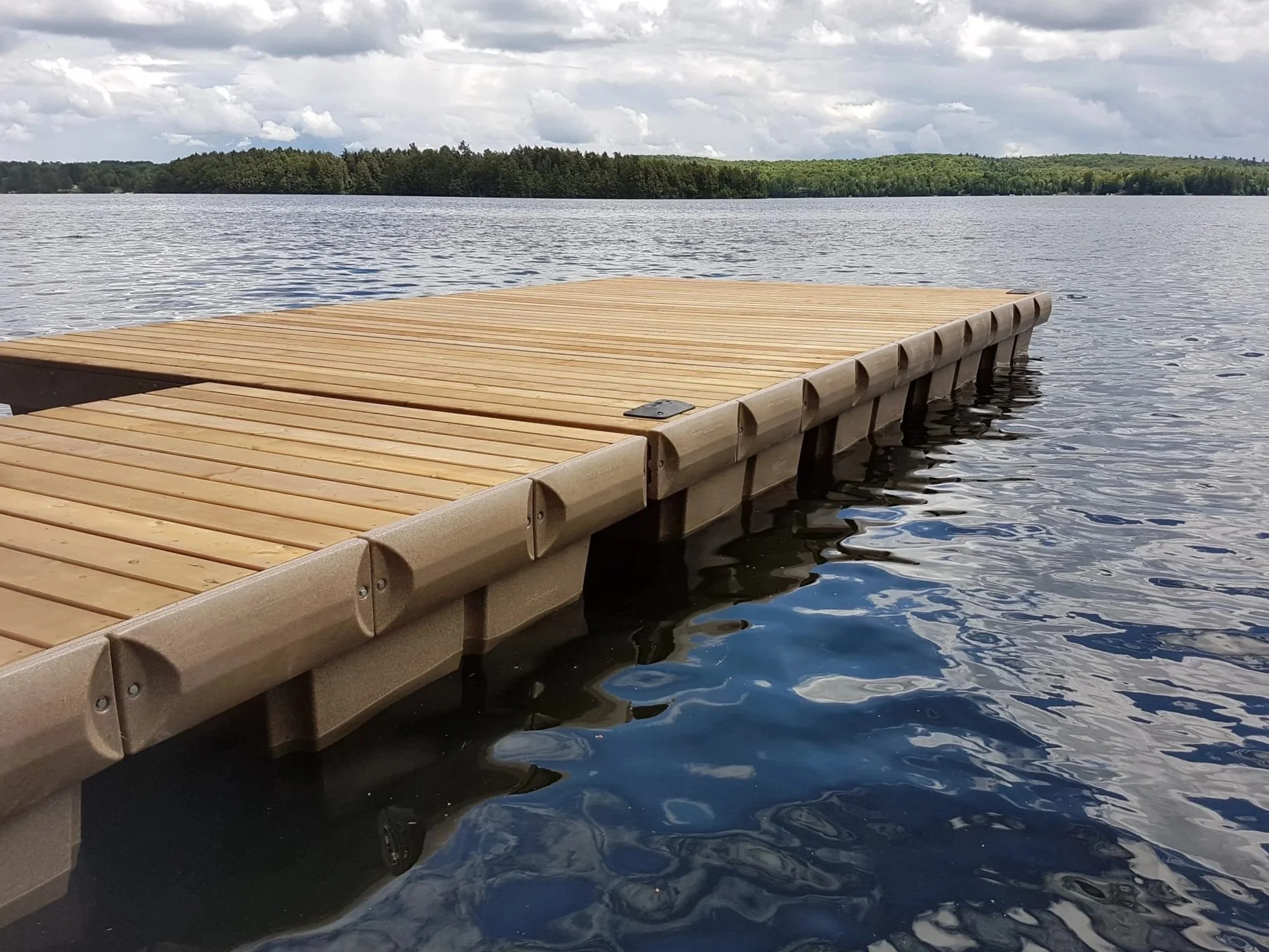
Discover the enduring elegance of a lakefront Muskoka dock, meticulously crafted by MP Deck and Dock for seamless waterfront integration and durability.
When evaluating these options, environmental factors—including water depth, sediment type, and weather patterns—must be weighed alongside intended usage, such as residential leisure versus industrial operations. MP Deck and Dock Company employs expert assessments to recommend tailored solutions, integrating sustainable materials for enhanced performance.
For personalized guidance on selecting the optimal dock type, contact MP Deck and Dock Company to schedule a consultation.